
A recession deeper than anticipated
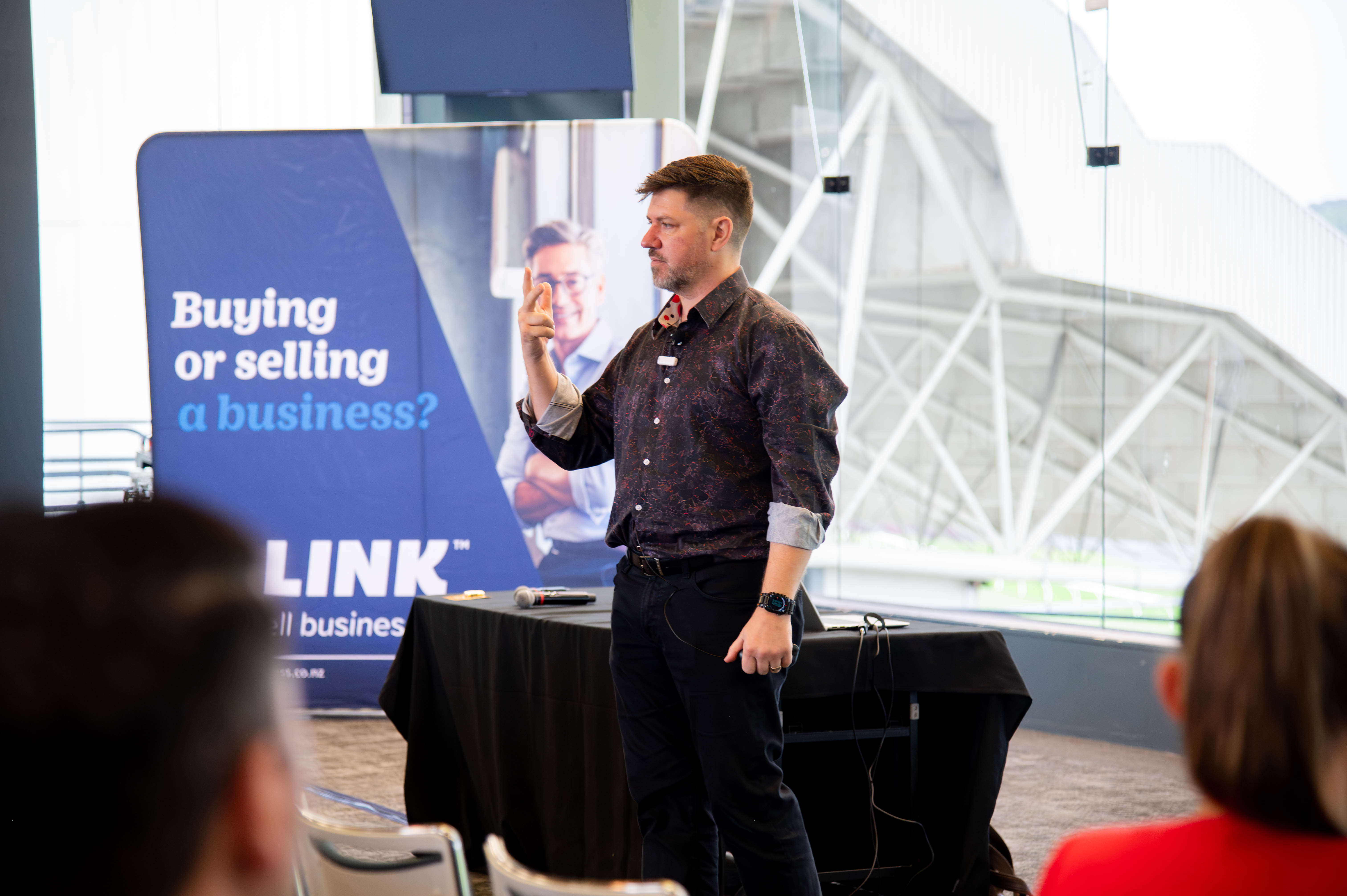
Jarrod opened with the reality many business owners already recognise. New Zealand has slipped back into recession and economic activity remains below last year’s levels. The hoped-for pivot from “survive till 25” to “thrive in 25” did not eventuate. Instead, frustration and disappointment have been common across sectors.
What sets New Zealand apart is the cause. Unlike Australia and several major economies, our recession has been largely self-inflicted. The Reserve Bank’s tightening cycle went too far, too fast, pushing businesses to reduce hours, pause investment, and absorb cost pressures that households felt immediately.
“The good news is that the toughest period is behind us,” says Jarrod.
Interest rates finally set the stage for recovery
The Reserve Bank has now taken the Official Cash Rate below 3 percent, acknowledging the need for a genuinely stimulatory setting.
“Mortgage rates have gone from seven and a half right into the fours. That’s a big move. That’s when interest rates actually start to bite and get people excited again.”
Inflation has fallen from 7.3 percent to around 3 percent, and Jarrod anticipates it will drop below 2 percent next year. With wage growth sitting near 3 to 3.5 percent, households are on track to regain spending power. This shift often reignites confidence and activity.
For business buyers and sellers, this transition is significant. Lower borrowing costs strengthen valuations and expand the buyer pool, creating a rare moment where the market is well aligned for decisive action.
Global dynamics raising the stakes
Jarrod also explored the geopolitical backdrop shaping New Zealand’s economic outlook. Rising protectionism, influenced partly by aggressive US tariff settings, is reshaping global trade. The shift demands that small, export-dependent economies work harder for every trade dollar and diversify beyond traditional partners such as China, the United States, and Australia.
The turbulence has fuelled volatility in currency markets, rising gold prices, and increased diversification by central banks. While the US dollar remains dominant, this global realignment is a trend business owners should monitor closely, particularly those operating in import-heavy or internationally exposed industries.
A country divided in confidence
Regional performance remains uneven. The South Island has shown a clearer uplift, with Christchurch and Otago signalling stronger hiring and investment intentions. Auckland remains cautious and Wellington continues to struggle under constrained public sector budgets and widespread economic uncertainty.
For buyers and sellers, these contrasts create distinct regional opportunities that will become increasingly apparent as conditions improve.
Structural challenges still in focus
New Zealand’s long-standing productivity problem persists. Jarrod highlighted infrastructure shortfalls, slow technology adoption, and shifting migration patterns as factors that will continue to shape growth.
Net migration is deteriorating, with record numbers of skilled Kiwis leaving for Australia and the United Kingdom. This trend may tighten labour availability just as the economy begins to accelerate.
These pressures will influence both the pace and strength of New Zealand’s recovery. Businesses that plan for them early, particularly around staffing and capability, will be well positioned to move quickly as conditions improve.
A new direction at the Reserve Bank
A significant shift is the arrival of incoming Reserve Bank Governor Dr Anna Breman. Her international credibility and experience at Sweden’s Riksbank signal a move toward greater transparency and potentially more balanced capital requirements. If business-lending risk weightings are adjusted, access to capital for SMEs could improve, increasing liquidity and activity in the business-sales market.
“Her credentials are so much better than what we thought we would attract,” says Jarrod.
What this means for business owners looking to sell
Owners who have delayed selling through the downturn may find the next 12 to 24 months more favourable. As interest rates ease and confidence returns, well-prepared businesses with tidy financials, strong systems, and a clear value proposition will stand out.
Buyers are expected to return early in the cycle and will prioritise businesses that have proven resilient, with stable cash flow and growth potential.
What this means for buyers planning for growth
This phase of the cycle offers rare leverage. Competition remains moderate, capital is becoming more accessible, and many vendors are recalibrating their timelines. Buyers who act before valuations fully reflect improving conditions will be best placed to secure high-quality opportunities.
“Resilience and smart decision-making will define the winners of 2026.”
Looking ahead
The recession has been longer and deeper than necessary, but the foundations for recovery are strengthening. Rate cuts are gaining traction. Regions are diverging in ways that create both opportunity and risk. Global and domestic shifts are shaping what the next cycle will look like.
It is a moment that calls for clarity, timing, and informed decision-making.
A recession deeper than anticipated
Jarrod opened with the reality many business owners already recognise. New Zealand has slipped back into recession and economic activity remains below last year’s levels. The hoped-for pivot from “survive till 25” to “thrive in 25” did not eventuate. Instead, frustration and disappointment have been common across sectors.
What sets New Zealand apart is the cause. Unlike Australia and several major economies, our recession has been largely self-inflicted. The Reserve Bank’s tightening cycle went too far, too fast, pushing businesses to reduce hours, pause investment, and absorb cost pressures that households felt immediately.
“The good news is that the toughest period is behind us,” says Jarrod.
Interest rates finally set the stage for recovery
The Reserve Bank has now taken the Official Cash Rate below 3 percent, acknowledging the need for a genuinely stimulatory setting.
“Mortgage rates have gone from seven and a half right into the fours. That’s a big move. That’s when interest rates actually start to bite and get people excited again.”
Inflation has fallen from 7.3 percent to around 3 percent, and Jarrod anticipates it will drop below 2 percent next year. With wage growth sitting near 3 to 3.5 percent, households are on track to regain spending power. This shift often reignites confidence and activity.
For business buyers and sellers, this transition is significant. Lower borrowing costs strengthen valuations and expand the buyer pool, creating a rare moment where the market is well aligned for decisive action.
Global dynamics raising the stakes
Jarrod also explored the geopolitical backdrop shaping New Zealand’s economic outlook. Rising protectionism, influenced partly by aggressive US tariff settings, is reshaping global trade. The shift demands that small, export-dependent economies work harder for every trade dollar and diversify beyond traditional partners such as China, the United States, and Australia.
The turbulence has fuelled volatility in currency markets, rising gold prices, and increased diversification by central banks. While the US dollar remains dominant, this global realignment is a trend business owners should monitor closely, particularly those operating in import-heavy or internationally exposed industries.
A country divided in confidence
Regional performance remains uneven. The South Island has shown a clearer uplift, with Christchurch and Otago signalling stronger hiring and investment intentions. Auckland remains cautious and Wellington continues to struggle under constrained public sector budgets and widespread economic uncertainty.
For buyers and sellers, these contrasts create distinct regional opportunities that will become increasingly apparent as conditions improve.
Structural challenges still in focus
New Zealand’s long-standing productivity problem persists. Jarrod highlighted infrastructure shortfalls, slow technology adoption, and shifting migration patterns as factors that will continue to shape growth.
Net migration is deteriorating, with record numbers of skilled Kiwis leaving for Australia and the United Kingdom. This trend may tighten labour availability just as the economy begins to accelerate.
These pressures will influence both the pace and strength of New Zealand’s recovery. Businesses that plan for them early, particularly around staffing and capability, will be well positioned to move quickly as conditions improve.
A new direction at the Reserve Bank
A significant shift is the arrival of incoming Reserve Bank Governor Dr Anna Breman. Her international credibility and experience at Sweden’s Riksbank signal a move toward greater transparency and potentially more balanced capital requirements. If business-lending risk weightings are adjusted, access to capital for SMEs could improve, increasing liquidity and activity in the business-sales market.
“Her credentials are so much better than what we thought we would attract,” says Jarrod.
What this means for business owners looking to sell
Owners who have delayed selling through the downturn may find the next 12 to 24 months more favourable. As interest rates ease and confidence returns, well-prepared businesses with tidy financials, strong systems, and a clear value proposition will stand out.
Buyers are expected to return early in the cycle and will prioritise businesses that have proven resilient, with stable cash flow and growth potential.
What this means for buyers planning for growth
This phase of the cycle offers rare leverage. Competition remains moderate, capital is becoming more accessible, and many vendors are recalibrating their timelines. Buyers who act before valuations fully reflect improving conditions will be best placed to secure high-quality opportunities.
“Resilience and smart decision-making will define the winners of 2026.”
Looking ahead
The recession has been longer and deeper than necessary, but the foundations for recovery are strengthening. Rate cuts are gaining traction. Regions are diverging in ways that create both opportunity and risk. Global and domestic shifts are shaping what the next cycle will look like.
It is a moment that calls for clarity, timing, and informed decision-making.
If you are considering your next move, get in touch. Here at LINK Business, we help New Zealanders buy and sell great businesses with confidence.
To read more insights about the current market, check out our latest market update here.
Ready to take the next step? Get in touch here.